C1
Ceremonial Dress
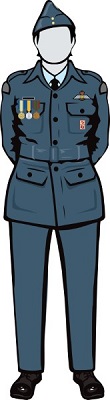
Formal ceremonies and parades, including occasions such as CO's Parade, ACR and Remembrance Day when directed by the squadron.
View Official C1 Instructions ↗Training, uniforms, advancement, recognition and opportunities in one place.
Our regular Tuesday training night at Eleanor W. Graham Middle School, from arrival through dismissal.
Air Cadet training progresses through proficiency levels. Select a level below to view its training focus and curriculum.
New cadets are introduced to the fundamentals of the Air Cadet Program, including citizenship, leadership, physical fitness, drill, aviation, aerospace, survival, navigation and marksmanship.
By the end of Level 1: cadets should understand the basic expectations of the program and be able to participate confidently in regular squadron training.
Official Level 1 Curriculum (QSP) ↗Level 2 develops the skills introduced during the first year. Cadets take part more independently, deepen their aviation and field knowledge, and begin developing leadership skills.
By the end of Level 2: cadets should demonstrate stronger practical skills and a growing ability to work effectively as part of a team.
Official Level 2 Curriculum (QSP) ↗Level 3 places greater emphasis on leadership, instructional techniques and responsibility. Cadets begin leading small groups and teaching basic skills to junior cadets while continuing aviation, survival, fitness and other training.
By the end of Level 3: cadets should be able to take on junior leadership roles and assist with instruction and squadron activities.
Official Level 3 Curriculum (QSP) ↗Level 4 prepares senior cadets to take a more active role in running the squadron. Training emphasizes leadership, instructional ability, planning, mentoring and advanced Air Cadet knowledge.
By the end of Level 4: cadets should be ready to lead activities, deliver instruction and mentor junior cadets under staff supervision.
Official Level 4 Curriculum (QSP) ↗Senior cadets focus on practical leadership and instructional responsibilities within the squadron. Rather than simply repeating classroom training, they apply their experience by helping plan, lead, instruct and mentor.
The goal: prepare experienced cadets for meaningful senior leadership responsibilities and continued development within the program.
Different activities call for different orders of dress. These four cards give cadets a quick reference; the buttons open the official Government of Canada dress instructions for the complete requirements.
Formal ceremonies and parades, including occasions such as CO's Parade, ACR and Remembrance Day when directed by the squadron.
View Official C1 Instructions ↗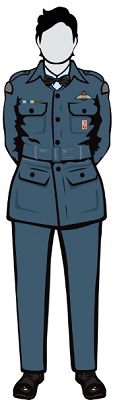
An optional formal order of dress for mess dinners and other formal occasions when ordered.
View Official C2 Instructions ↗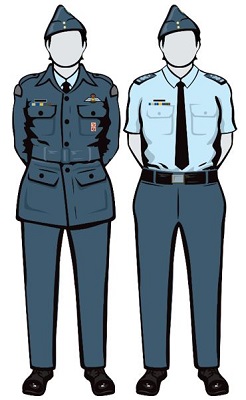
The blue service uniform used for routine duty when directed. The official instructions also show the C3A/B and C3C variations.
View Official C3 Instructions ↗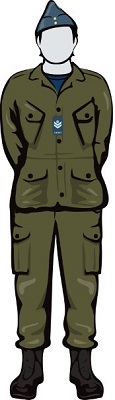
Functional dress for specific environmental and squadron training. At 773, the FTU is used for most regular training nights and field activities.
View Official C5 Instructions ↗For the complete rules covering uniform wear, appearance and presentation, use the official CJCR Dress Instructions.
The current CJCR Dress Instructions place appearance standards around three main principles: safety, inclusion, and changing societal norms. Cadets are still expected to be well presented and to wear their uniform correctly.
Hair may be coloured, and long hair is permitted. It must not prevent the proper wear of headdress or protective equipment, must leave the face visible, and must be secured when required for safety or when it extends below the shoulder.
Facial hair and sideburn styles are permitted, subject to safety requirements and the proper wear of required equipment.
The instructions permit rings and multiple ear piercings, with activity-specific restrictions possible for safety or ceremonial reasons. The rules include specific limits for gauges/spacers and nose piercings.
Make-up, nail polish, artificial nails, temporary lashes and eyelash extensions are permitted unless they interfere with safety or the cadet's ability to perform their duties.
Eyeglasses and sunglasses are permitted with all orders of dress.
C1 has additional appearance requirements for formal occasions, including specific guidance for hair, jewellery and piercings. Cadets should check the ceremonial rules before a formal parade.
This summary is for quick reference. The Government of Canada dress instructions are the authoritative source and contain the full details and illustrations.
Cadet rank generally advances as a cadet completes each training level over the year, so most cadets move up about once a year.
Promotion is earned, not automatic. It depends on:
Senior ranks and leadership appointments (such as the Warrant Officer roles) are awarded through a merit review board that considers a cadet's whole record, not time served alone.
The officer team explains the specific requirements at each level.
New cadets start as an Air Cadet, with no rank badge, then progress through these ranks as they advance and take on more responsibility. Each rank has its own insignia, worn on the uniform as set out in the dress instructions above.
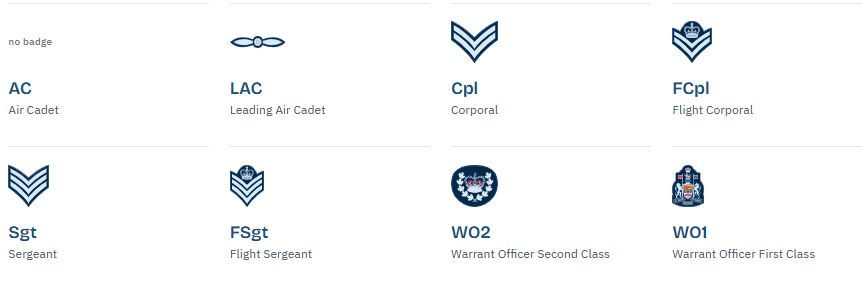
Official reference: CJCR Dress Instructions, Rank Insignia (Annex B) ↗
This chart shows how adult staff, the Squadron Sponsoring Committee and cadet leadership appointments work together to support 773 Richibucto RCACS.
The structure gives cadets clear leadership opportunities at each tier while showing how adult staff and the Squadron Sponsoring Committee support the squadron.
As cadets progress into senior ranks, leadership appointments provide practical opportunities to lead and mentor other cadets and help with the operation of the squadron.
These appointments give cadets who have completed Level 3 an opportunity to begin taking on formal leadership responsibilities. An appointment is optional at this tier.
Cadets eligible for promotion to Flight Sergeant are selected for a corresponding leadership appointment before promotion.
WO2-tier appointments build on previous leadership experience and provide opportunities to lead activities with greater independence.
The WO1-tier appointment is the Squadron Chief Warrant Officer, the highest cadet leadership responsibility within the squadron.
Senior leadership appointments are not based on time served alone. Cadets applying for the higher tiers go through a formal selection process for a Rank Eligibility List.
For the FSGT, WO2 and WO1 tiers, the process includes an interview with a selection board. Cadets submit an application package that includes a cover letter, résumé and supporting documentation. The board considers the cadet's suitability for the tier and leadership appointments.
Cadets must first be placed on the appropriate Rank Eligibility List. For FSGT and higher, they are not promoted until selected for a leadership appointment that corresponds with that rank.
For the complete eligibility, application, selection-board and appointment process, refer to CJCR Gp Instruction 50-56.
Cadets are recognized for achievement, service, and leadership.
Alongside the level badges earned through training, there are national and provincial honours, long-service recognition, and squadron awards presented each year at the Annual Ceremonial Review.
Our Badges & Insignia Guide explains each badge, wing, and award in plain language, with a picture of each.
Cadets can also apply for scholarships toward post-secondary education and flight training. See Scholarships & Opportunities.
The Air Cadet League of Canada, its New Brunswick Provincial Committee, and the wider Canadian Forces community offer scholarships and unique opportunities to cadets who put in the work. Cadets are strongly encouraged to apply.
A competitive summer flying opportunity where successful cadets work toward a Transport Canada glider pilot licence.
A competitive flying and ground-school opportunity leading successful cadets toward a Transport Canada private pilot licence.
A public-speaking program and competition that builds confidence and communication skills, advancing from the squadron to regional, provincial, and national levels.
National Effective Speaking Program ↗The Air Cadet League offers post-secondary scholarships and bursaries to help cadets continue their education after the program.
Eligible cadets can apply for a free CFOne card from the Canadian Forces community, with access to participating discounts and benefits.
See our CFOne guide →Interested in computers, problem-solving or learning how cyber security works? Explore the 773 Cyber Challenge page for team information, annual dates and registration updates.
Cadets can apply for funded summer courses at Cadet Training Centres (CTCs) across the country, from shorter introductory opportunities to multi-week specialist courses. These are optional, and selection can be competitive.
Who can go, and when: summer training opportunities have eligibility requirements based on training year, age and the specific course.
Many opportunities are intended for cadets who have completed at least their first full training year, while specialist courses and pilot training require higher levels and additional eligibility requirements.
One of the most popular courses: air-rifle target shooting under close supervision, from the fundamentals up to coaching and competition.
Field and survival skills, including navigation and safe outdoor training.
Physical fitness, coaching, recreation and competitive sport opportunities.
Music development for cadets who play, or want to develop skills in, a band or pipe-band instrument.
Advanced drill, parade leadership and ceremonial skills.
These aviation courses and the pilot scholarships are specific to air cadets. Places are few and selection is very competitive, based on a cadet's training level, performance, and a national selection board.
See Scholarships & awards for how the flying scholarships work.
A two-week introduction to aerospace, airport operations, and aircraft manufacturing and maintenance.
A longer course building specialist knowledge and instructional skill in aviation, communication, and meteorology.
Multi-week summer courses where selected senior cadets train to fly solo and earn a Transport Canada glider or private pilot licence. Highly competitive, with very limited spots (glider from age 16, power from 17).
See the full list on the official Cadets summer training page ↗, including the courses open to all cadets ↗ and the Air Cadet Specific Courses ↗.
Eligible older cadets can apply to work at a Cadet Training Centre as staff cadets, taking on responsibility while receiving a training bonus for their work.
A few times a year you head out for a weekend Field Training Exercise (FTX). These are part of your training, so plan to attend; if you cannot make a date, let the squadron know in advance. A full kit list, the dates, and the location go home before each one. The list below is a typical example so you can pack ahead. Pack for the weather, in layers.
These weekend exercises typically involve camping, team-building activities, and learning how to live and move safely in a field setting. Each proficiency level has specific training objectives that must be met during these exercises to progress to the next rank.
Everyone can have times when they need support. Cadets can reach out to a parent or guardian, school counsellor, health professional, trusted adult, or one of the services below.
National Defence maintains an official collection of health, wellness and support services for Cadets, Junior Canadian Rangers and adult staff.
Free support for young people across Canada. Support is available 24/7 by phone or text.
Call: 1-800-668-6868
Text: CONNECT to 686868
Find information on mental health, getting support, crisis services, and free or low-cost services available in your area.
Access Mental Health Supports ↗Kids Help Phone's Resources Around Me can help young people find vetted in-person and virtual programs, services and supports in Canada.
Resources Around Me ↗A Canada-wide support service for Indigenous people, with culturally competent counsellors available by telephone and online chat 24 hours a day, 7 days a week.
Hope for Wellness ↗If there is immediate danger or an urgent medical emergency, call 9-1-1. Canada also provides 24/7 crisis support by calling or texting 9-8-8.
Use the appropriate communication channel below for squadron questions, attendance, volunteering and training-year communication.
For questions about training, attendance, uniform issues, or anything that needs an officer's attention:
This is a shared officer inbox.
For SSC business, volunteering, or fundraising enquiries:
You can bring your question to a committee member directly on Tuesday evenings.
We are moving towards using the DND-provided Cadet365 platform (Teams and Outlook) for training-year communication with officers and peers.
The Attendance channel in the “T-ATL-773 Air” team will be one of the two accepted ways to report an absence.
Collect your Cadet365 credentials, sign in successfully, and get in the habit of checking Teams at least a couple of times a week.
If you cannot sign in, see password and account help on the Resources page.
See the Absence PageEvery cadet agrees to the national Cadet Code of Conduct, signed by both the cadet and a parent or guardian. It helps keep the squadron a safe and respectful place for everyone.
In short, cadets agree to:
For anything specific, reach out to the officer team at 773air@cadets.gc.ca.